Documentary · 16:12
The Island That Was Blamed
Watch
Watch the full documentary on YouTubeSynopsis
Easter Island is told as a warning: a people who cut down every tree, starved, turned on each other and collapsed. The evidence stopped fitting that story decades ago. The arrival date moved from 800 to around 1200. The obsidian blades long read as spearheads were measured and found to be general-purpose tools. The great stone platforms do not stop being built — construction continues past the arrival of the first European ship. The forest really did fall, and on that there is no argument from any side. But what happened to the people happened later, and it came from outside: in December 1862, eight ships took roughly 1,400 Rapanui to the guano islands of Peru. By 1877, one hundred and eleven people remained.
What the record cannot say
Stated because it is part of the evidence, not despite it.
Which way did the canoes go between Polynesia and South America?
Fifteen ancient genomes carry around ten per cent Native American ancestry dated to roughly 1250-1430, generations before any European arrived. The DNA establishes that contact happened. It does not name the sailors, and it does not say which direction they travelled.
In the film The narration states the contact and refuses the direction. It says the DNA does not name the sailors.
How severe was the island's ecological transformation, and how fast?
The forest fell — there are burned palm stumps still rooted where they stood, and no side disputes it. The rate, the cause and the human consequence remain genuinely argued between specialists.
In the film Stated as fact where it is fact, and carried in hedged wording where it is contested: 'coincided with', 'is now argued to be'.
What did the great 'defensive trench' on Poike actually enclose?
It is now argued to be an old shoreline rather than a fortification. There is no recorded ditch-and-embankment and no palisade anywhere on the island.
In the film Presented as a reading that has changed, not as a settled correction.
Gallery
Authentic historical material only. Every item states its source and its licence.
-
Authentic evidence
Simon Evans
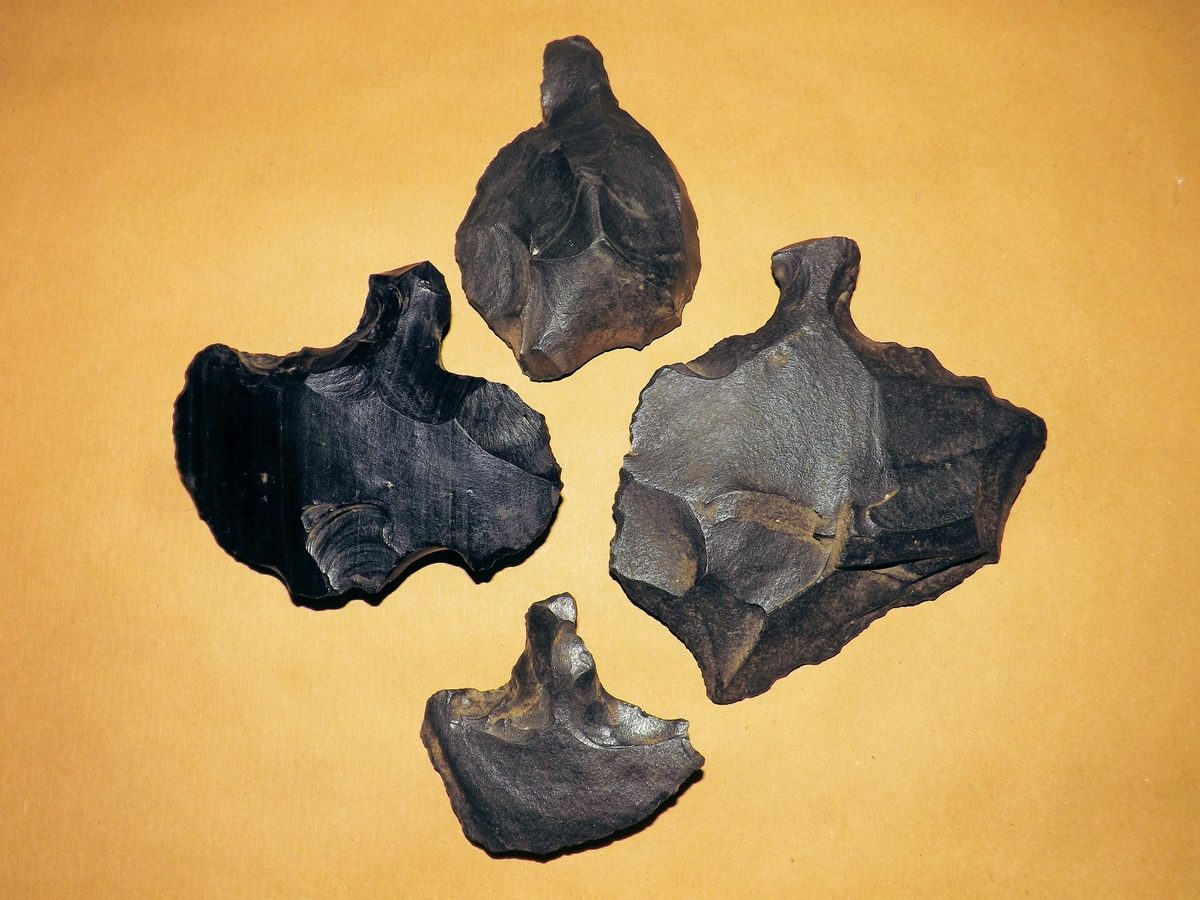
The obsidian mata'a were read for decades as spearheads, and that reading is most of the case for a war. Measured and compared as a set, they are general-purpose tools. This is the single object on which the accepted story turns.
-
Authentic evidence
Dennis G. Jarvis
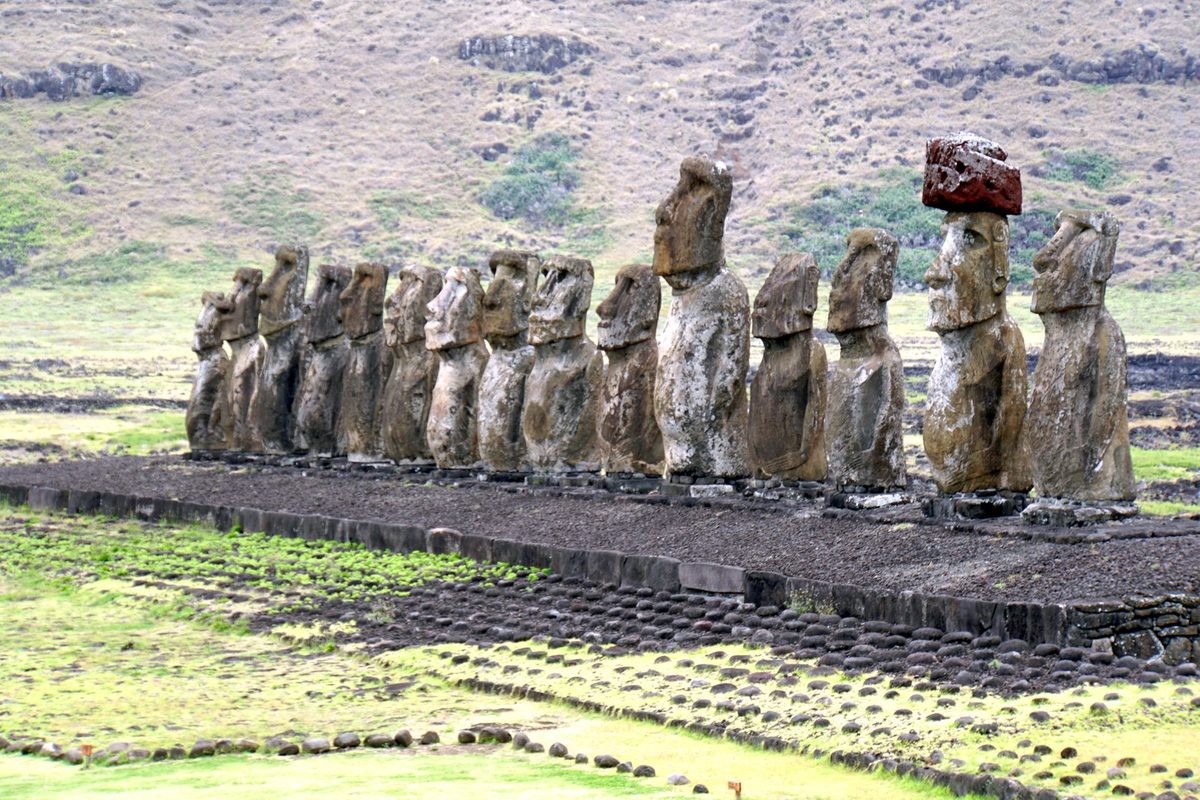
Ahu Tongariki is the scale of the achievement the collapse story treats as a headstone. Platforms like it were still being built past 1600, past 1700, and past the first European ship.
-
Authentic evidence
Dennis G. Jarvis
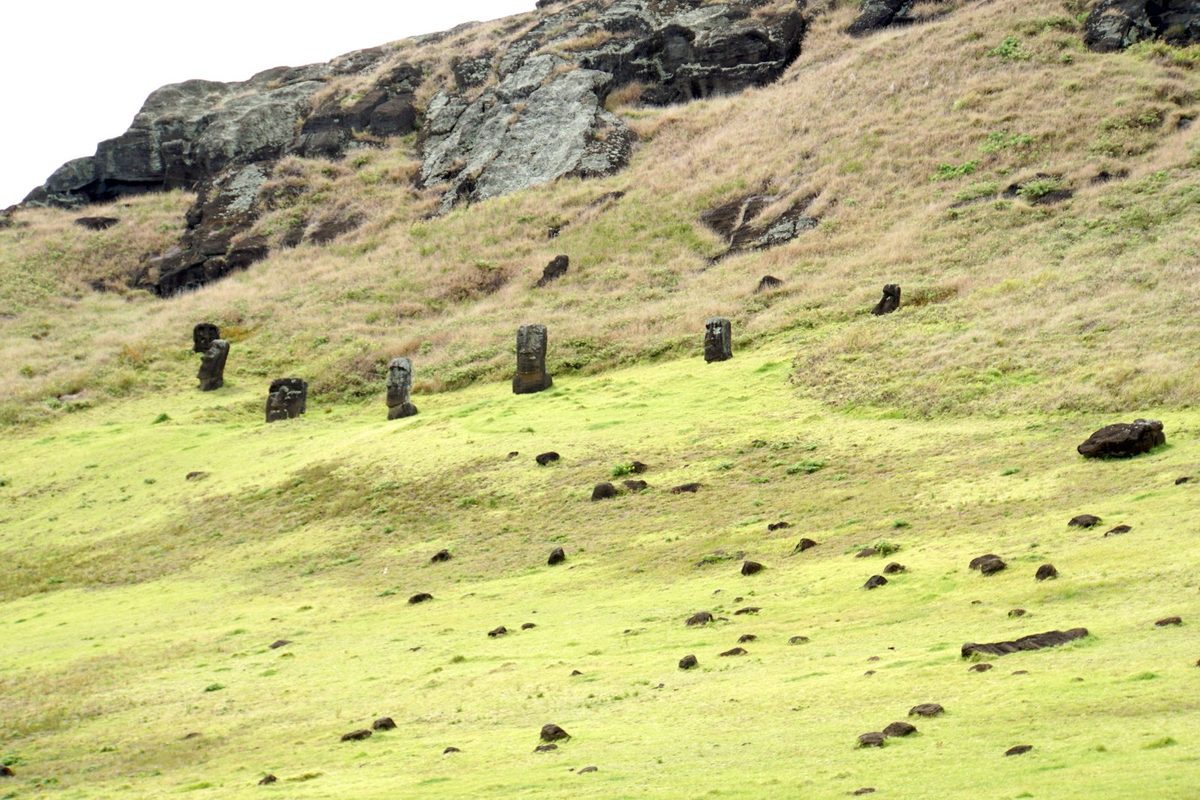
The quarry at Rano Raraku, where moai stand unfinished in the rock. Work stopping is usually read as collapse; it is equally the signature of a population that was taken.
-
Authentic evidence
Dennis G. Jarvis
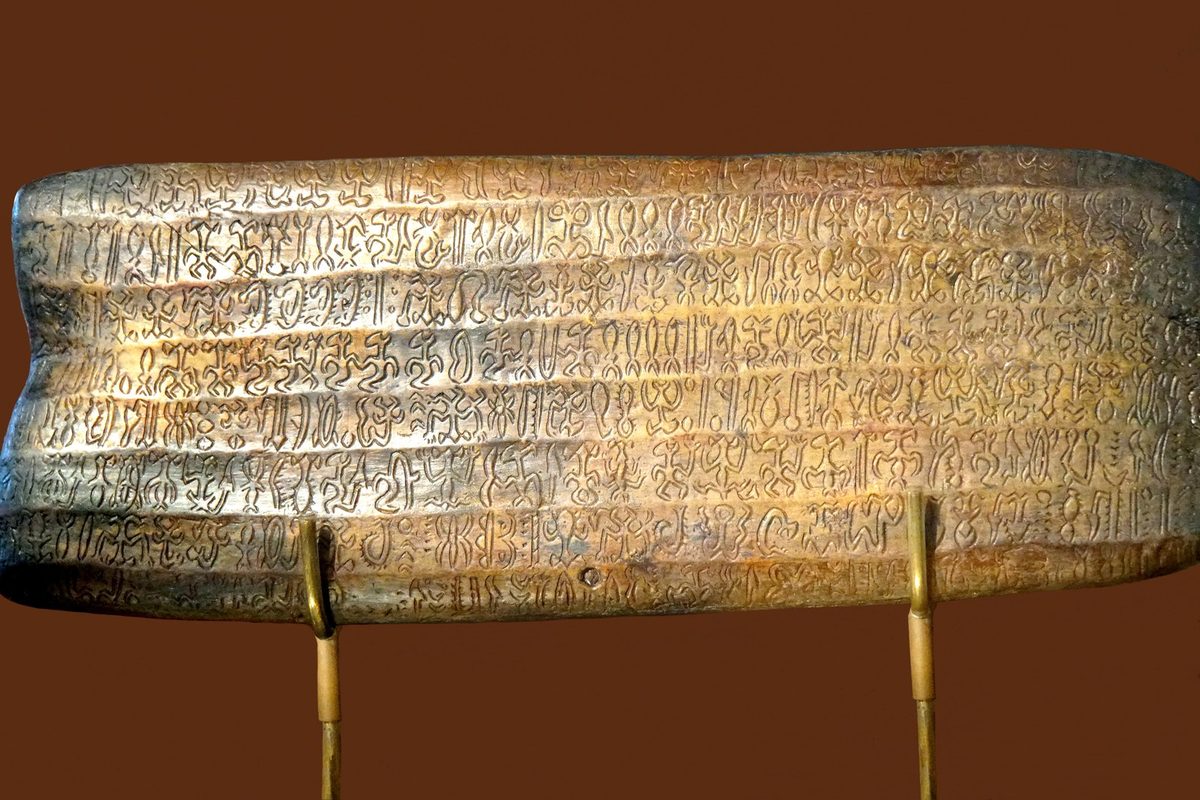
Rongorongo remains undeciphered. Of the people who could read it, almost none survived 1862 — the loss of a script is one of the most direct measures of what the raids took.

.jpg)
.jpg)
